
The Sheriff has a fundamental responsibility to protect every citizen in the county to the best of his ability. Fulfilling that responsibility requires law enforcement to use lawful tools and appropriate resources to protect the innocent and uphold the oath we swear to serve and defend our communities.
Today, there is heightened attention on how local governments should address illegal immigration within their jurisdictions. I have been clear from the beginning: your Sheriff’s Office must be transparent and accountable to you. Transparency requires confronting difficult issues openly and engaging in honest conversations, especially on topics that are often avoided out of fear or political pressure. No longer should candidates hide behind “safe” language in order to win your vote. When you elect someone you should know exactly where they stand on the issues. I have taken the lead amongst the other candidates during this election cycle to make my platform and my vision public so you know exactly what you will get from me when you vote for me.
I know the national media would like folks to think this is a controversial topic but the folks of White County know better than to buy into the “spin” that they see on major networks. Local leaders must research the issues and make common sense decisions based on the facts and not the views being pushed on us from networks trying to gain viewership by providing opinions on the news. I have spent significant time discussing this issue with citizens across the county, on all sides of the debate, and I have found that when these conversations happen openly and respectfully, most people share common ground. I have carefully researched the ICE 287(g) program, reviewed its benefits and limitations, and am prepared to clearly state my position.
The ultimate role of the Sheriff is to lead the Sheriff’s Office by providing clear vision, strong guidance, and principled leadership in protecting the citizens of the county from threats to our safety, peace, and freedom. This role requires a leader who is willing to address difficult issues openly, stand firm in the face of political pressure, and make decisions rooted in what is right, not what is easy.
Across the nation, law enforcement leaders are facing increasingly complex challenges with limited resources. Local agencies frequently rely on partnerships with state and federal authorities to effectively combat crimes such as fraud, theft, human trafficking, narcotics distribution, and other organized criminal activity. These partnerships often provide critical tools, training, and funding through task forces and cooperative agreements with agencies such as the DEA, FBI, ATF, U.S. Marshals, and the TBI. In the past, the White County Sheriff’s Department has benefited from these partnerships, bringing valuable resources back to our community.
This brings us to the present discussion.
America was founded as a nation of opportunity, where individuals could pursue a better life through lawful and established pathways. Many have done so and have become productive, valued members of our communities. Unfortunately, some have chosen to ignore those legal pathways. While not every individual who enters this country illegally does so with criminal intent, far too often illegal entry is tied to criminal enterprises that harm our communities and threaten public safety.
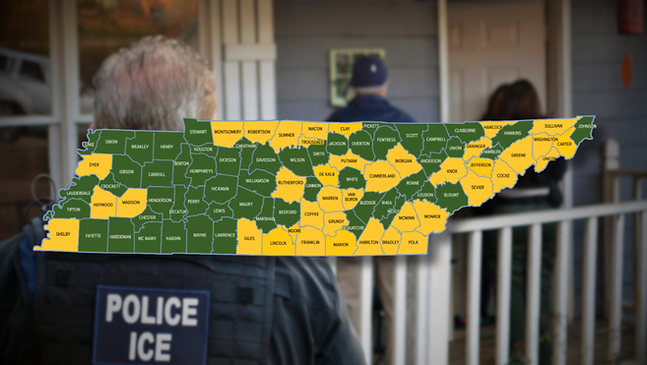
ICE, like other federal agencies, offers programs designed to assist local law enforcement in addressing these challenges. The ICE 287(g) program has existed since 1996, but it has only recently come under increased scrutiny. I approached this issue with caution and skepticism, carefully weighing the potential benefits against legitimate concerns.
My first concern was clear: local law enforcement should not prioritize proactive enforcement of immigration status. Our deputies must focus their time and resources on protecting our citizens and addressing crime—not conducting raids at homes, workplaces, or places of worship solely based on determining an individual's immigration status.
My second concern was the potential for discrimination. The White County Sheriff’s Office must serve every person with professionalism and respect. No one should ever fear contacting law enforcement because of their race, background, or national origin.
My third concern involved federal overreach and the risks that can accompany accepting outside funding. Financial assistance must never compromise our independence, constitutional obligations, or local control.
With these concerns in mind, I conducted a review of the 287(g) program. I learned that it consists of three models. The Jail Model and Warrant Model allows trained corrections officers to identify individuals already in custody for criminal offenses who may be subject to immigration detainers before they are released. This model mirrors existing inmate checks and adds an additional federal database review. It also allows trained officers to serve detainer warrants during the incarceration process to remove these dangerous individuals off of our streets. It enhances public safety, removes dangerous individuals already charged with crimes, and helps reduce the financial burden on local taxpayers with grants that pay for incarceration costs.
The Task Force Model allows trained officers to address immigration violations when they encounter them during their normal law enforcement duties—not through proactive enforcement or targeting. These models provide additional training, tools, and funding while maintaining constitutional safeguards.
Throughout my career, I have repeatedly encountered individuals who were in this country illegally and committing serious crimes. At times I would reach out to ICE for assistance in getting these illegal immigrants who were violators of local and state laws off of our streets but with no success. Too often, efforts to involve federal authorities failed, resulting in dangerous offenders returning to our streets. I commend ICE for finally expanding cooperation with local law enforcement and providing resources to address this gap.
As your next Sheriff, I will pursue participation in the 287(g) program from ICE for the purpose of removing dangerous criminal offenders from our community, while ensuring that constitutional rights are protected and local priorities remain intact. We will not conduct immigration checkpoints, raids, or proactive enforcement based on race or background. We will not allow federal partnerships to dictate unconstitutional actions. If at any time these standards are compromised, I will immediately terminate the agreement and inform the public. Until that time, I will welcome cooperation with ICE by implementing one or more models and begin the process of involving their assistance in keeping our county safe. I will use that resource to not only protect our citizen's safety but also help protect their hard earned local tax paying dollars by allowing our federal partners to provide funding for incarceration costs.
It is time for the White County Sheriff’s Office to take its oath seriously and stand firm in protecting our citizens. We will be tough on crime, unwavering in our values, and committed to justice. By building strong partnerships and maintaining transparency with the public, we will ensure White County remains a safe place to live, work, and raise a family.